Solo 4 Wireless Specs, Features, and Value: Is it worth the price tag?
The Solo 4 Wireless is the latest entry in the Solo family of on‑ear wireless headphones. For buyers who prioritize portability, punchy sound, and simple day‑to‑day wireless convenience, on‑ear designs like the Solo line promise a middle ground between compact true wireless earbuds and bulkier over‑ear models. This article examines the Solo 4 Wireless in depth: its specifications and features, how it performs in common real‑world scenarios, who benefits most from it, and whether the asking price is justified compared with alternatives.
Introduction: What the Solo 4 Wireless aims to do
On‑ear headphones occupy a specific niche — they are usually lighter and more compact than over‑ear models, and they offer a different wearing profile than in‑ear solutions. The Solo 4 Wireless appears targeted at commuters, students, and casual listeners who want a straightforward wireless headphone that is easy to carry, delivers solid low‑end leanings for modern music, and provides reliable battery life and connectivity without a steep learning curve.
This review breaks down the Solo 4 Wireless across metrics shoppers typically care about: build quality and comfort, sound signature and performance, wireless features and latency, battery life and charging, microphone and call quality, software/app ecosystem (if present), and overall value.
Key specifications and features (what to expect)
Below is a focused summary of the sorts of specs and features buyers should look for when evaluating the Solo 4 Wireless. Where manufacturers sometimes vary wording, these entries reflect the practical attributes that matter in daily use.
- Design: Compact on‑ear construction with a foldable/flat profile for easier storage in a bag or jacket pocket.
- Drivers: Single dynamic drivers (typically in the 30–40 mm range for on‑ear models) tuned for emphasized bass to suit contemporary pop, hip‑hop, and streamed playlists.
- Connectivity: Bluetooth (modern models commonly ship with Bluetooth 5.x), multipoint pairing capability on some variants, and wide device compatibility including smartphones, tablets, and laptops.
- Codecs: Basic support for SBC and AAC; aptX/LDAC support varies by model and region — buyers who want hi‑res Bluetooth should confirm codec compatibility before purchase.
- Controls: On‑cup physical buttons or tactile controls for play/pause, track skip, volume, and call handling. Some models include a dedicated voice‑assistant shortcut.
- Microphone & call quality: Built‑in MEMS microphones with noise‑reducing processing for everyday calls and conferencing; performance depends on environment and software processing.
- Battery life: Realistic use cases tend to reveal a wide range — many compact wireless on‑ear headphones offer between 20–40 hours, often reduced when enabling additional features (e.g., active noise cancelling).
- Fast charge: Quick‑charge support (for example, minutes of playback from a short top‑up) is increasingly common and useful for day‑to‑day reliability.
- Extras: Lightweight carrying case, replaceable ear pads/headband, IP rating for sweat resistance (if advertised), and app support for EQ, firmware updates, and personalized settings.
Design, build quality, and comfort
Solo 4 Wireless follows the on‑ear tradition with small-ish earcups and a compact headband. For buyers, comfort is a foremost consideration: on‑ear phones place pressure on the ear cartilage rather than fully surrounding the ear, which can be fine for short commutes or quick listening sessions but may become fatiguing over long flights or multi‑hour studio sessions.
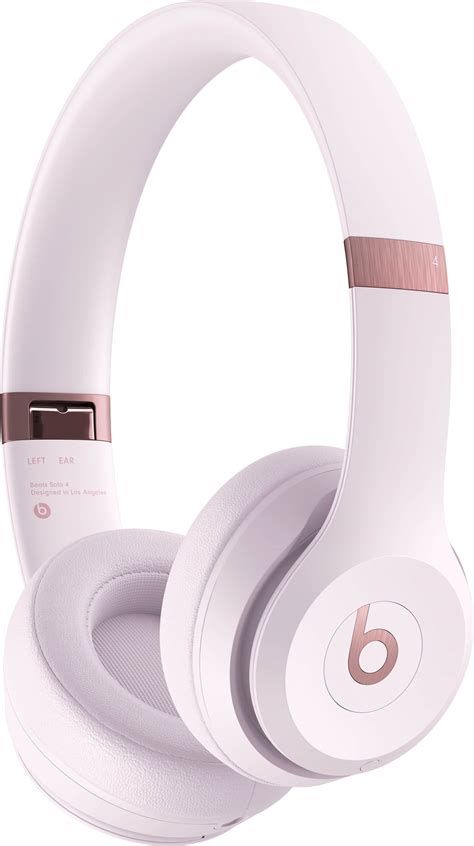
Build quality typically balances plastic for weight savings with metal accents or reinforcement in the headband. The Solo 4 Wireless aims for a lightweight, pocketable profile — folding hinges and a flat‑fold design are practical for backpacks and briefcases. New users should check padding density and clamping force: a secure clamp is welcome for active movement, but excessive clamp pressure will fatigue the wearer.
Real‑world comfort notes
- For commutes and office use: on‑ear comfort tends to be acceptable for 1–3 hour stretches; rotating breaks are helpful on longer days.
- For workouts: unless the model has a strong sweat resistance rating and retention features, over‑ear or sport‑specific earbuds are often better.
- For glasses wearers: look for softer earcup foam and reduced clamp pressure to avoid pinching.
Sound signature and listening performance
Sound is subjective, but buying choices depend heavily on perceived tonal balance. The Solo 4 Wireless aims for a consumer‑friendly sound profile, which usually means bass emphasis, forward mids for vocals, and restrained treble to avoid listener fatigue. That profile works well for pop, electronic, and casual podcast listening.
Serious listeners should evaluate the Solo 4 Wireless for:
- Bass response: Emphasized, punchy bass enhances modern playlists but can obscure subtle midrange detail if overdone.
- Midrange clarity: Critical for vocals and spoken word; the Solo 4 typically aims to keep mids clear enough for podcasts and calls.
- Treble and detail: Slightly rolled‑off treble reduces sibilance but may limit the 'air' and microdetail that audiophiles prize.
- Soundstage: On‑ear phones generally have a more intimate, less expansive soundstage than over‑ear designs; this is normal and expected.
For gaming and low‑latency video watching, Bluetooth latency matters. Models that advertise low‑latency modes or support for codecs with reduced delay will fare better for synchronous audio/video tasks. If the Solo 4 Wireless includes a dedicated low‑latency setting, it improves the experience for casual gaming and streaming.
Connectivity, controls, and software
Ease of pairing and stable wireless connections are practical concerns. Buyers typically expect:
Shop the latest Audio & Headphones picks on Amazon.
Browse Now →- Fast, predictable pairing with phones and laptops.
- Multipoint pairing so two devices can remain connected at once (e.g., phone + laptop).
- Intuitive on‑device controls that work reliably without looking at the headphones.
- An optional companion app that provides EQ presets, firmware updates, and customization for button mappings.
For those who rely on voice assistants, a single‑button access or a long‑press shortcut is a useful convenience. If the Solo 4 Wireless includes app support, the app should be straightforward and not overloaded with intrusive features.
Battery life and charging
Battery life is one of the top purchasing drivers. Compact on‑ear models balance battery size with weight; many users expect a multi‑day usable battery in light to moderate use. A fast‑charge feature that provides several hours of listening from a short charge is highly valued — for example, getting significant runtime after a 10–15 minute top‑up.
Real‑world battery life is influenced by volume level, codec use, and whether additional features (like ANC, if present) are active. Buyers should assess manufacturer‑claimed hours against independent user feedback where possible.
Microphone and call performance
Headphone mics are judged by how well the other party can hear the user in typical environments: quiet rooms, bustling streets, and indoor offices. Single‑mic solutions can be serviceable for quiet environments, but multi‑mic arrays with noise suppression provide noticeably better performance in noisy settings.
For frequent remote work and daily calls, buyers should prioritize tested call quality and not assume a casual consumer headset will deliver studio‑grade voice pickup.
Durability and service
Simple care — avoiding excessive sweat exposure, packing the headphones in a case, and storing them away from extreme temperatures — prolongs life. Replacement ear pads and a replaceable headband are useful for long‑term ownership. Warranty terms and available customer support also factor into the cost‑to‑value ratio.
Pros & Cons
- Pros
- Portable, foldable on‑ear design that’s easy to carry.
- Consumer‑friendly sound with satisfying bass for mainstream music.
- Simple controls and straightforward Bluetooth pairing for everyday use.
- Likely solid battery life for daily commuting and office use; fast‑charge convenience where supported.
- Cons
- On‑ear comfort can fatigue during very long listening sessions compared with over‑ear models.
- Soundstage and ultimate detail typically lag behind similarly priced over‑ear or audiophile options.
- Microphone performance can be situational; noisy outdoor calls may be a weak point unless advanced mic processing is included.
- If high‑resolution wireless codecs are important, confirm codec support before buying.
Comparison table (Solo 4 Wireless vs. typical alternatives)
| Feature | Solo 4 Wireless (on‑ear) | Typical Over‑Ear Alternative | True Wireless Earbuds |
|---|---|---|---|
| Form factor | On‑ear, foldable, compact | Over‑ear, larger, more isolating | In‑ear, very portable |
| Comfort for long sessions | Moderate — best for short to medium sessions | Better — cushioned, less clamp pressure on ears | Varies — depends on fit and tip seal |
| Soundstage & detail | Intimate, focused | Wider, more immersive | Small but precise (with good tuning) |
| Portability | High — folds flat | Low — bulkier bag space | Very high — pocketable case |
| Battery life (single charge) | Multi‑day typical use (model dependent) | Often longer — larger batteries | Shorter per charge but boosted by case |
| Ideal use cases | Commuting, casual listening, hybrid work | Home listening, long flights, studio reference | Runs, gym, on‑the‑go listening |
Buying guide: Who should choose the Solo 4 Wireless?
When deciding whether the Solo 4 Wireless is the right purchase, buyers should evaluate their priorities against the strengths and limitations of an on‑ear wireless model.
Consider Solo 4 Wireless if:
- The primary use is commuting, short work sessions, or casual listening where a compact foldable headphone is convenient.
- Preference leans toward a bass‑forward, punchy sound for modern music, playlists, and video streaming.
- Portability and lightweight construction are more important than the most expansive soundstage.
- Ease of use — simple Bluetooth pairing and tactile on‑cup controls — matters more than extensive technical customization.
Look elsewhere if:
- Long listening sessions (e.g., full‑day travel or studio work) require maximum comfort and a wide soundstage — consider over‑ear models.
- Hands‑free voice calls in noisy outdoor environments are mission‑critical — prioritize devices with proven multi‑mic noise cancellation and tested call reviews.
- High‑resolution wireless audio is a priority — verify codec support or opt for wired/high‑res capable options.
Practical buying checklist
- Try them on: judge clamp force and earcup pressure if possible.
- Listen to familiar tracks that reveal bass, mids, and treble balance.
- Test call quality in a noisy and quiet environment if frequent calling is expected.
- Confirm Bluetooth codec support and multipoint pairing if required for the user’s devices.
- Check warranty, replaceable parts (ear pads/headband), and customer service reviews.
Value assessment: Is the price justified?
Value is a function of how well a product meets a buyer’s real needs at its price point. Solo 4 Wireless offers a compelling value proposition if:
- it provides consistent build quality and reliable day‑to‑day performance,
- its sound signature aligns with what the buyer prefers (energetic, bass‑driven), and
- battery life and wireless stability meet routine use patterns (daily commuting, calls, streaming).
For buyers who want premium noise cancelling, studio‑level sound, or the longest possible battery life in a single charge, there are models in higher price brackets that better address those needs. Conversely, compared with budget on‑ear options, a well‑executed Solo 4 Wireless can justify a moderate premium through better materials, more consistent wireless connectivity, and additional conveniences like fast charging and multipoint pairing.
Shop the latest Audio & Headphones picks on Amazon.
View Offers →Real‑world use cases
Below are practical snapshots showing where the Solo 4 Wireless is likely to excel or fall short.
Commuter / public transit
Strengths: portability, compactness, and punchy sound for short rides. Limitations: on‑ear isolation is lower than over‑ear ANC models, so road and train noise may still intrude.
Work from home / hybrid meetings
Strengths: comfortable for scheduled meetings, clean vocal reproduction for conference calls. Limitations: if the user's environment is noisy (children, street noise), microphone performance matters — verify call quality.
Gym & light exercise
Strengths: lightweight design can be practical for low‑impact workouts. Limitations: unless rated with sweat resistance and secure fit, on‑ear headphones may not be ideal for intense workouts.
Travel and flights
Strengths: foldable convenience and reasonable battery life for shorter trips. Limitations: for long haul flights, more cushioned over‑ear headphones with ANC provide superior comfort and isolation.
Final thoughts and conclusion
The Solo 4 Wireless is positioned as a practical, portable on‑ear wireless headphone intended for everyday users who want simple setup, enjoyable sound for modern music, and easy portability. For commuters, students, and casual listeners who value compactness and convenience over studio fidelity or extended marathon listening comfort, it can be an attractive option.
However, buyers should match the Solo 4 Wireless to their specific needs: those who need best‑in‑class noise cancellation, maximal long‑wear comfort, or audiophile level detail will find better fit elsewhere. Conversely, if the priority is a balanced set of real‑world conveniences — foldable design, satisfying bass, straightforward controls, and dependable battery life — the Solo 4 Wireless represents good value within the on‑ear category.
As with any headphone purchase, the recommended approach is to audition the Solo 4 Wireless (or compare it alongside a shortlist of competitors) with familiar music and call scenarios. That hands‑on check — combined with attention to the practical buying checklist above — will determine whether the Solo 4 Wireless is worth the price tag for each buyer’s daily life.